
CRM vs Bespoke Software: Which Does Your Small Business Need?
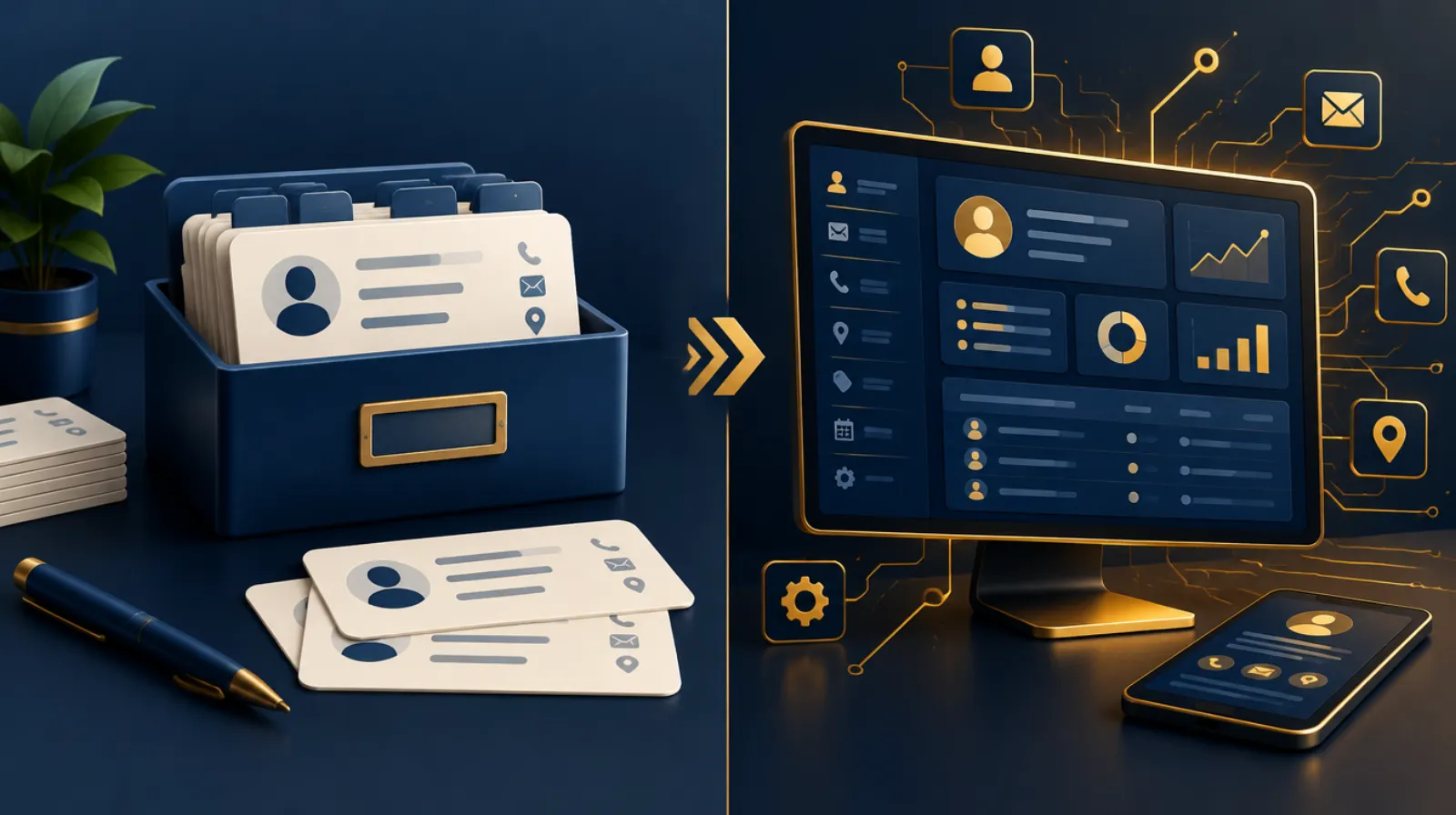
Sooner or later, most growing businesses outgrow their spreadsheets and ask the same question: should we buy a CRM or build something bespoke? The honest answer is that it depends. This guide explains CRM vs bespoke software in plain English, so you can choose with confidence.
A CRM, or customer relationship management system, is ready-made software for tracking contacts, enquiries and sales. Bespoke software is built around the way your business already works. Both can be the right choice, and each can be the wrong one.
Off-the-shelf CRM system: what it does well
An off-the-shelf CRM keeps customer information in one place. It records contacts, tracks enquiries through a sales pipeline, sends reminders and shows who spoke to whom and when.
Well-known CRM platforms, such as HubSpot or Salesforce and Microsoft Dynamics 365, are used by thousands of businesses. That brings real advantages:
- Quick to start. You can often be up and running in days.
- Lower upfront cost. You pay a monthly fee per user instead of funding a build.
- Proven features. Contact records, pipelines, email tracking and reports are already there.
- Maintained for you. The supplier handles updates and security.
For a standard sales process, an off-the-shelf software package of this kind is often the sensible starting point.
The limits of off-the-shelf CRM solutions like HubSpot or Salesforce
The same thing that makes a CRM quick to start can also limit it. Generic software is built for thousands of businesses, so it rarely matches yours exactly.
You may end up paying for features you never use, or working around a missing one. Some businesses find they spend more time adapting to the tool than the tool saves them.
Bespoke software development and custom CRM systems: when they make sense
Bespoke software, also called custom software, is built specifically for your business. A custom CRM follows your process, uses your terms and connects to the other systems you already use.
Bespoke CRM systems and bespoke CRM solutions focus on the functionality your team really needs, from customer service tools to a clear record of customer interactions. Bespoke development also lets you connect the business software you already own, instead of replacing it.
It can be a better fit when:
- Your process is unusual and gives you an advantage you do not want to lose.
- You are forcing a CRM to do things it was not designed for.
- Several systems need to work together in a specific way.
- Different teams need different views, permissions or approvals.
- You are paying for many features you never use.
The trade-off is responsibility. A bespoke system needs planning, testing, hosting and ongoing support, so it is a bigger commitment than switching on a CRM.

The advantages of a bespoke solution
The main advantage of a bespoke solution is fit. It does what your business needs, in the order your team does it.
It also grows with you. When your process changes, the software can change too, instead of waiting for a supplier to add a feature.
Customisation and deployment
Customisation is where bespoke software stands apart. You decide the screens, the rules and the reports. Deployment is also planned around you, so your team can start with the part that matters most and add more later.
CRM vs bespoke software: a side-by-side comparison
Here is how the two compare on the points that matter most to a small business:
- Speed to start: a CRM is usually faster. Bespoke software takes longer because it is designed and built first.
- Upfront cost: a CRM is usually lower. Bespoke software is a larger one-off investment.
- Running cost: CRM fees are charged per user, per month, and grow as your team grows. Bespoke software has hosting and support costs instead.
- Fit to your process: a CRM asks you to adapt to it. Bespoke software adapts to you.
- Flexibility: a CRM is limited by what the supplier offers. Bespoke software can change as your business changes.
- Integrations: many CRMs connect to popular tools. Bespoke software can connect to almost anything with an API.
- Ownership: with a CRM you rent access. With bespoke software you control the system and the data.
How much does each option cost?
CRM pricing is usually per user, per month. Entry plans can be quite affordable, while plans with automation, reporting and extra users cost more. The total grows with the size of your team, so it is worth working out the cost over three years, not three months.
Bespoke software is priced for the project. The cost depends on what it needs to do, how many systems it connects to and how many people use it. A short discovery exercise is the best way to get a realistic figure, because it shows what is genuinely needed and what can wait.
Starting small helps. Many businesses begin with one core workflow, prove the return, then add more. Our guide to when to replace spreadsheets with custom software explains how to decide where to begin.
Do you have to choose one or the other?
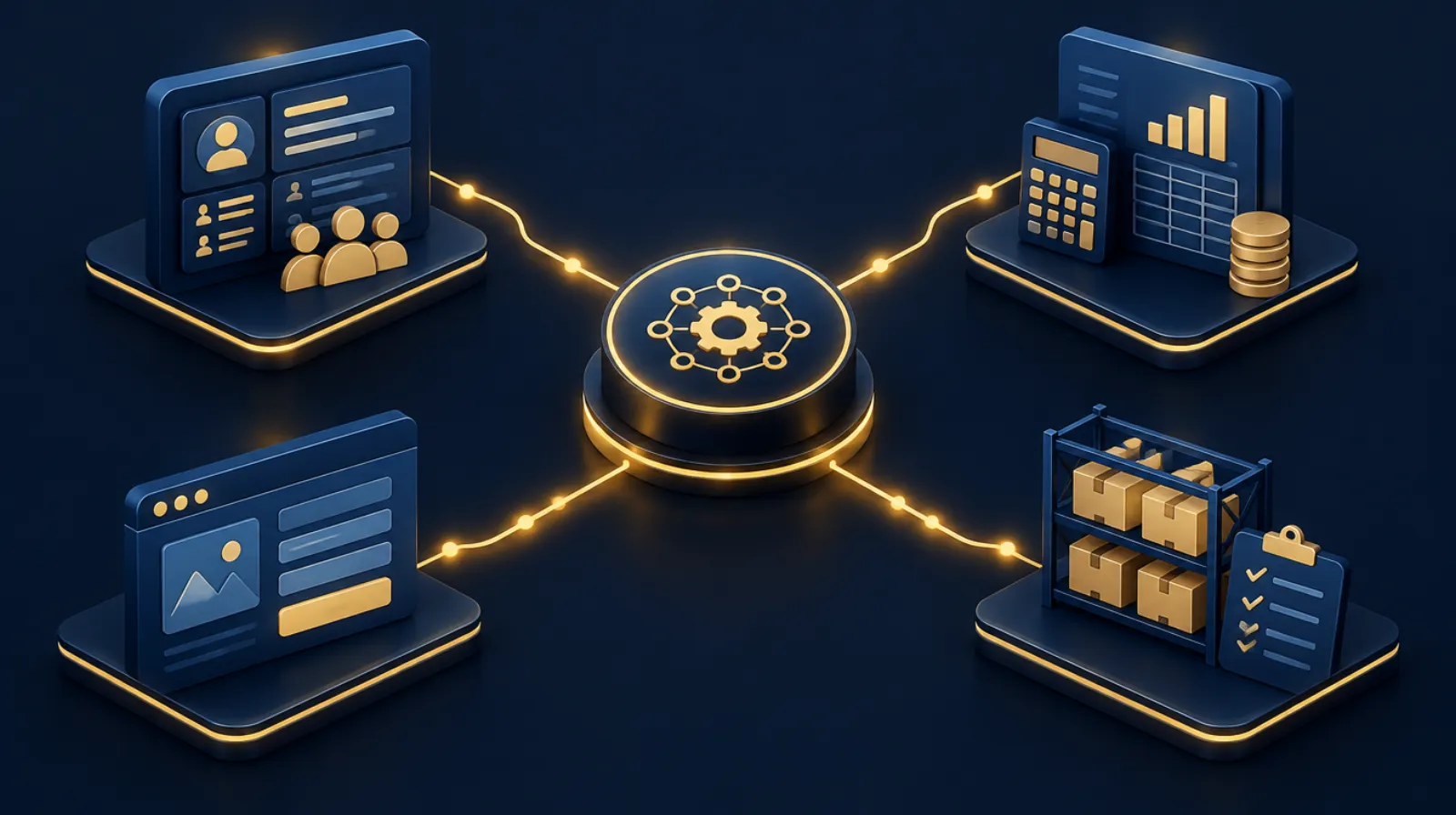
No. Many businesses use both. A common approach is to keep a CRM for contacts and sales, then build a small custom tool for the part of the business that does not fit, such as quoting, job scheduling or customer portals.
This works well because of integration. An API lets different systems share data, so information is entered once and flows to where it is needed. The CRM stays simple, and the custom tool handles the unusual parts.
A simple checklist to help you decide
Answer these questions honestly:
- Does your sales process look like most other businesses in your sector?
- Would a standard pipeline and contact record cover 80 per cent of what you need?
- Do you need to connect several systems in a very specific way?
- Is your process itself a competitive advantage?
- Do you have the time to plan, test and maintain a bespoke system?
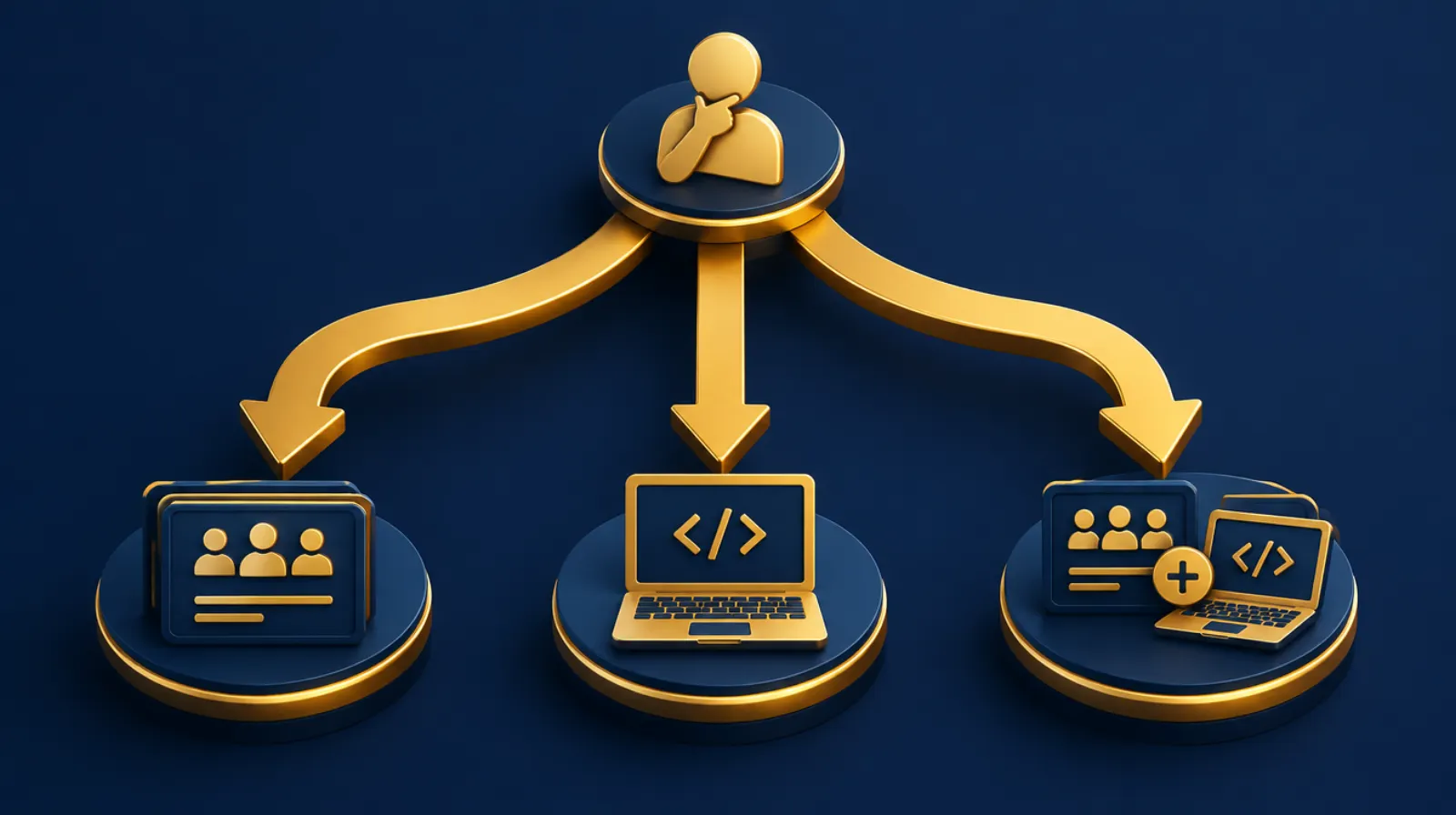
If most answers are yes to the first two, start with a CRM. If you are answering yes to the middle three, bespoke software or a mix of both is worth exploring.
Questions to ask a CRM supplier before you buy
If a CRM looks like the right choice, ask the supplier these questions first:
- What does it cost per user per month, and what does each plan include?
- Can I export all of my data if I decide to leave?
- Which of my existing tools does it connect to, such as accounting software?
- How much can I customise without paying for extras?
- Where is my customer data stored, and who can access it?
Clear answers to these questions tell you quickly whether an off-the-shelf CRM platform can support your business needs, or whether you are better off with something built for you.
Moving across without disrupting the business
Whichever route you choose, the move needs care. Clean your existing data first. Remove duplicates, agree naming rules and decide what history really needs to come across.
Run a small pilot with one team before everyone switches. This is where real-world problems appear, and fixing them early saves time. Train people on the tasks they do each day, and set a clear date when the old spreadsheet becomes read-only.
If repetitive admin is the main frustration, our guide to workflow automation for small businesses shows where to start.
How we can help
If you are weighing up a CRM against something built around your process, we are happy to talk it through. Our bespoke software development work starts with a short discovery call, so you can see whether a ready-made tool, a custom build or a mix of both is the better fit before you spend anything.
Frequently asked questions about CRM vs bespoke software
Is bespoke software better than a CRM?
Not automatically. A CRM is often the better choice for a standard sales process. Bespoke software is better when your process is unusual, when you need several systems to work together or when off-the-shelf tools force awkward workarounds.
Is a CRM cheaper than custom software?
Usually, at the start. A CRM has a lower upfront cost, but fees grow with each user. Bespoke software costs more to build, but you are not renting it. It is worth comparing the total cost over a few years.
Can I start with a CRM and move to bespoke software later?
Yes. Many businesses do. As long as your data is clean and exportable, you can start with a CRM and replace or extend it once your needs are clear.
Can bespoke software connect to my existing CRM?
Often, yes. If your CRM offers an API, a custom tool can exchange data with it, so information flows between the two without re-typing.
How do I know when spreadsheets are no longer enough?
Warning signs include several versions of the same file, repeated manual data entry, reports that take hours to reconcile and one person who holds all the knowledge. If that sounds familiar, it is time to look at a proper system.
Which is better for a small business, CRM vs bespoke software?
For most small businesses with a standard sales process, a CRM is the simpler starting point. If your process is unusual or you need several systems to work together, bespoke software is worth a conversation.
Not sure which route fits your business?
Book a free discovery call and we will talk through your process, your tools and whether a CRM, bespoke software or a mix of both makes sense.