
How Much Does a Website Cost for a UK Small Business?

How much does a website cost UK small businesses typically pay? It is the first question most business owners ask. The honest answer to how much does a website cost UK wide is that it depends. A one-page site for a sole trader and a website with online booking, payments and a customer portal are completely different projects.
This guide explains what drives the cost of a small business website. It also shows how a DIY builder compares with a web designer, a freelancer or a web design agency. Finally, it covers how to compare quotes fairly, and which ongoing costs people forget to budget for.
How much does a website cost UK businesses pay in total?
The total cost of a small business website is the sum of two things. The first is the upfront cost of designing and building it. The second is the ongoing cost of keeping it online, secure and useful. Many people only price the first part. A realistic budget covers both, plus the marketing needed to bring visitors to the site.
Price follows effort. The more design, build, writing and testing a site needs, the more it costs. A basic website with a few pages is a small project. A professional website with custom design, a content management system, search optimisation and a booking system is a larger one. The sections below explain the main cost factors, so you can see where your own project sits and what the typical costs depend on.
The main cost factors behind website creation
Website creation is not one task. It is design, build, writing, testing and launch, and each part takes time. Here is what moves the price.
1. The number and type of pages
A simple site with a home page, a few service pages and a contact page needs far less work than a site with dozens of service, location and product pages. Each page also needs good copy, so a bigger page website means more writing and more review.
Local businesses that serve several towns often add a page for each area. That is extra work, but it pays off in search results.
2. Custom website design or a template
A website design built around your brand and customers takes more time than adapting a ready-made template. A template can be a sensible choice for a small budget.
A bespoke website usually does a better job of explaining what makes you different. It also avoids looking like every other site in your sector.
3. Features and functionality, from a contact form to an ecommerce store
A contact form is simple. Online booking, payments, a members area, stock listings or a connection to your accounting or CRM system adds design, development and testing. This is where a website becomes a business system rather than a brochure.
Ecommerce site costs: what an online store adds
An ecommerce plan with an online store adds product pages, a basket, payments and delivery options. It also needs ongoing care, because products, prices and stock change.
Before you ask for a quote, write down how many products you will sell and how customers will pay. That list helps a supplier price the work accurately.

4. Content: copywriting, photography and video
Websites are only as good as what is on them. If you supply polished copy and photos, the cost is lower. If you need help writing the pages or arranging photography, that is extra work. It is usually the work that makes the biggest difference to enquiries.
Small business owners often underestimate how long it takes to write clear copy for a site from scratch.

5. SEO and tracking set-up
A good build includes the basics: page titles and descriptions, sensible URLs, structured headings, fast loading, analytics and conversion tracking. Be wary of quotes that say "SEO included" without saying what that means. Ongoing local SEO is a separate, continuing activity, not a one-off task.
A simple monthly report from your analytics shows what the site is bringing in. It should be part of any serious package.
6. Who builds it and how they work
An experienced web designer who also understands marketing will cost more than someone who only builds pages. They should, however, save you time and rework. Ask who actually does the work, and whether you will have one person to talk to. A time fee for extra changes after launch should be agreed up front.
What does a professional site include?
A professional site is more than a good-looking home page. It should load quickly, work well on a phone, and make it obvious how to get in touch. It should also be easy for your team to edit and set up for tracking.
Ideally it is built on a platform that will not trap you with one supplier. Free options and cheap shortcuts can leave gaps in these areas, which is where many later issues come from.
Website builder, freelancer or web design agency?
There are three common routes to a new website. They sit at very different points on price, time and quality.
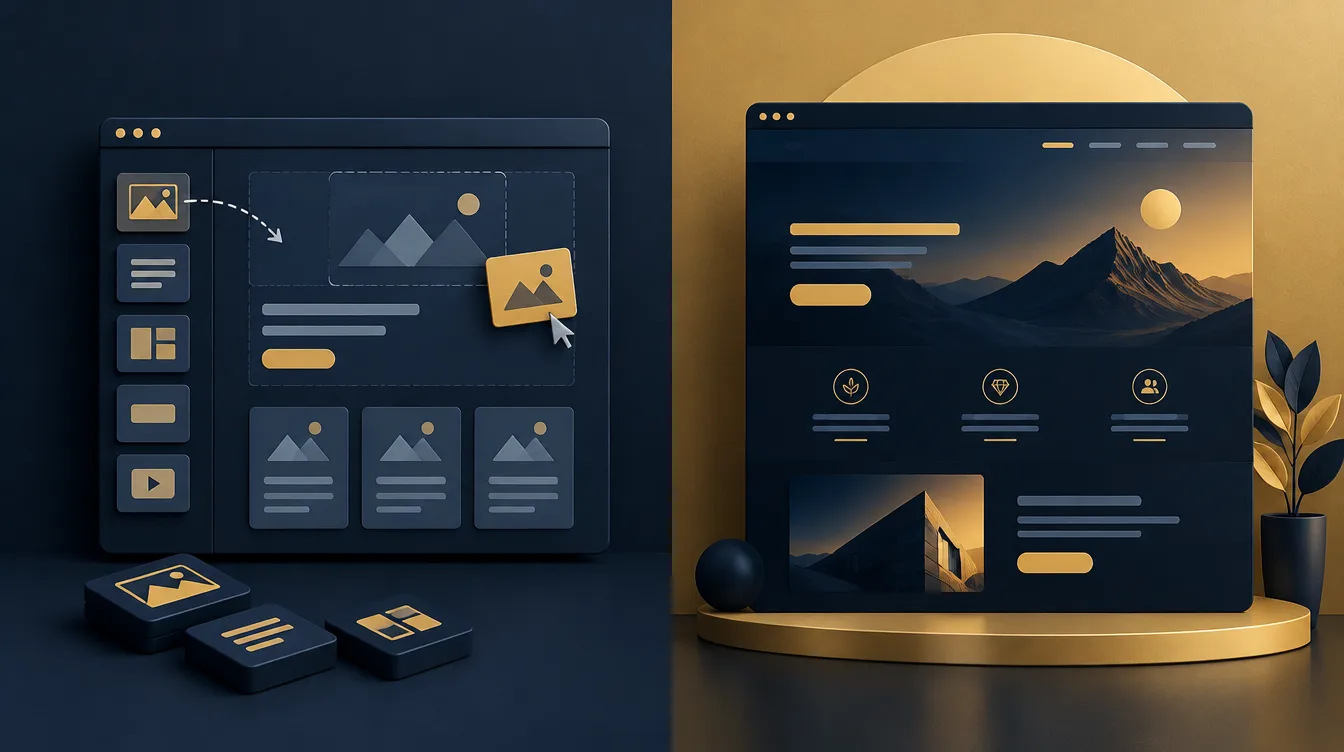
DIY website builders
A DIY builder, including the newer AI website builder tools, lets you create a simple website yourself from templates for a monthly subscription. Providers such as GoDaddy offer this kind of product. Some offer free plans, but these usually carry the provider's branding, a subdomain instead of your own address and limited features. That is why most businesses move to a paid plan.
Cheap DIY builders are the lowest-cost way to get online. They suit a basic website for a hobby or a very small business. The trade-offs are your own time and limited design freedom. You are also responsible for the copy, the structure and the search optimisation. Many beginner owners find a DIY site takes far longer than expected and ends up looking like a template.
Freelancers
A freelancer can be a good value option for a small project, especially if you have seen their previous work. Ask what happens if they are unavailable. Ask who owns the files and the domain, and who will provide ongoing support.

Web design agencies
A web design agency usually brings design, development, copywriting, SEO and project management together. That costs more, but it reduces the number of people you have to coordinate. This route suits businesses that want the site to do a serious job in generating enquiries. It also suits those who value a long-term relationship.
Choosing a platform: WordPress, Shopify and other options
Whichever route you choose, the platform matters. It affects what you can do and what the site costs to run.
- WordPress: flexible and widely supported, with thousands of plugins. Free plugins help, but a WordPress site needs regular updates and security care, and hosting is bought separately.
- Shopify and other ecommerce platforms: designed for selling products online, with payments, stock and delivery built in. Monthly plan fees and transaction charges apply.
- Website builders: simple to start and bundle hosting, but less flexible as your needs grow.
- Visual development platforms: allow custom designs and a content management system that your team can edit, with hosting included.
Ask your supplier why they recommend a platform and what it will cost to run over the years. That affects the total cost far more than the build price alone.
Types of website and what changes the price
- Brochure website: a handful of pages explaining who you are and what you do. The simplest and most affordable option.
- Small business site with a CMS: the same, but built so your team can edit pages, add news and update content without a developer.
- Online store: product pages, a basket, payments and delivery options. More complex, and it needs ongoing care.
- Bespoke website with a database: accounts, bookings or stock that your team manages. This is closer to software than a website, and we cover it under bespoke software development.
Domain names and web hosting
Two costs apply to almost every website, however it is built.
Domain registration
Your domain name is your web address. Registration is renewed every year or every few years, and prices vary by ending and provider. Most names cost a modest annual fee. Premium domains, which are short or highly sought-after names, can cost far more. Always register the domain in your own name so you control it.
Web hosting
Web hosting is where your site lives. Some platforms include it and others charge separately. The speed, security and support differ a lot. Cheap hosting can be slow, which hurts both visitors and search results.
The costs people forget: ongoing website maintenance and more
The build is not the only cost. Plan for these as well.

- Ongoing website maintenance: updates, backups and monitoring. Website management covers this for a monthly fee, and our guide to website maintenance services explains what a good plan includes and what it typically costs.
- Content updates: new pages, news and seasonal changes.
- Marketing: a website does not bring in customers on its own. Budget for search optimisation, your Google Business Profile, advertising or all three.
- Additional costs: premium plugins, email hosting, stock photography and licences.
A site that is never updated can develop security and speed issues. Treat maintenance as part of the running cost rather than an optional extra each year. At Athenium, our website management plans start at £49 a month plus VAT, so you can see what ongoing care costs before you commit.
Does a business website need a blog?
A blog is not essential, but it can bring in customers who are searching for answers before they are ready to buy. Helpful articles show that you know your subject. They give search engines more to rank and give you something to share.
If you do not have time to write regularly, it is better to publish a few strong guides than a stream of thin posts.
How to compare website quotes fairly
Ask ten suppliers how much does a website cost UK wide and you will get ten different answers, because two quotes with very different prices are rarely quoting for the same thing.
Ask each supplier to spell out:
- How many pages and which features are included.
- Whether copywriting, photography and SEO set-up are included.
- Who owns the domain, the design and the code once it is finished.
- What hosting, maintenance and support cost after launch, and what the contract term is.
- How long it will take and what they need from you.
Put the quotes side by side in a simple table. Compare the total cost over three years, not just the build price. A cheap build with expensive hosting and support can cost more in the end than a higher upfront price with fair running costs.
Red flags to watch for
- A price with no written scope.
- Not being the owner of your own domain name.
- Vague promises such as "first page of Google" with no explanation.
- No ongoing support, or support priced so that you cannot afford to ask.
- Pressure to sign up quickly without a clear plan.
Think about return, not just cost
A website that brings in even a few extra good enquiries a month can pay for itself quickly. So the question is not only how much does a website cost UK owners face, but what the site earns for the business.
That is why we start by asking what you want the site to achieve. If you tell us your goals, we can recommend the simplest site that meets them. That way you avoid paying for features you do not need.

Measure results with tracked form submissions and calls, so you can see what the site is worth to the business.
Frequently asked questions about website costs
Is a cheaper website always worse?
Not always, but cheaper options usually mean less custom work, less content help and less support. Check what you are actually getting for the price.
Do I need to pay monthly for a website?
You will normally pay for hosting and a domain. Maintenance and support are optional but worth having so the site stays secure and up to date.
Can I update the website myself?
Yes, if it is built on a content management system. Ask for this at the start, and for training so your team feel confident using it.
Is a DIY website builder good enough?
It can be for a very simple site. If the website is central to how you win customers, a professionally designed site normally earns its cost back.
Where can I get a quote?
Tell us what you need and we will agree a clear scope and price before work begins. See our web design service or get in touch.
We work with businesses across Lincolnshire and the Humber, including Grimsby and Hull.
Want a clear quote for your website?
Tell us what you need and we will agree a clear scope and price before we start. The first call is free.